
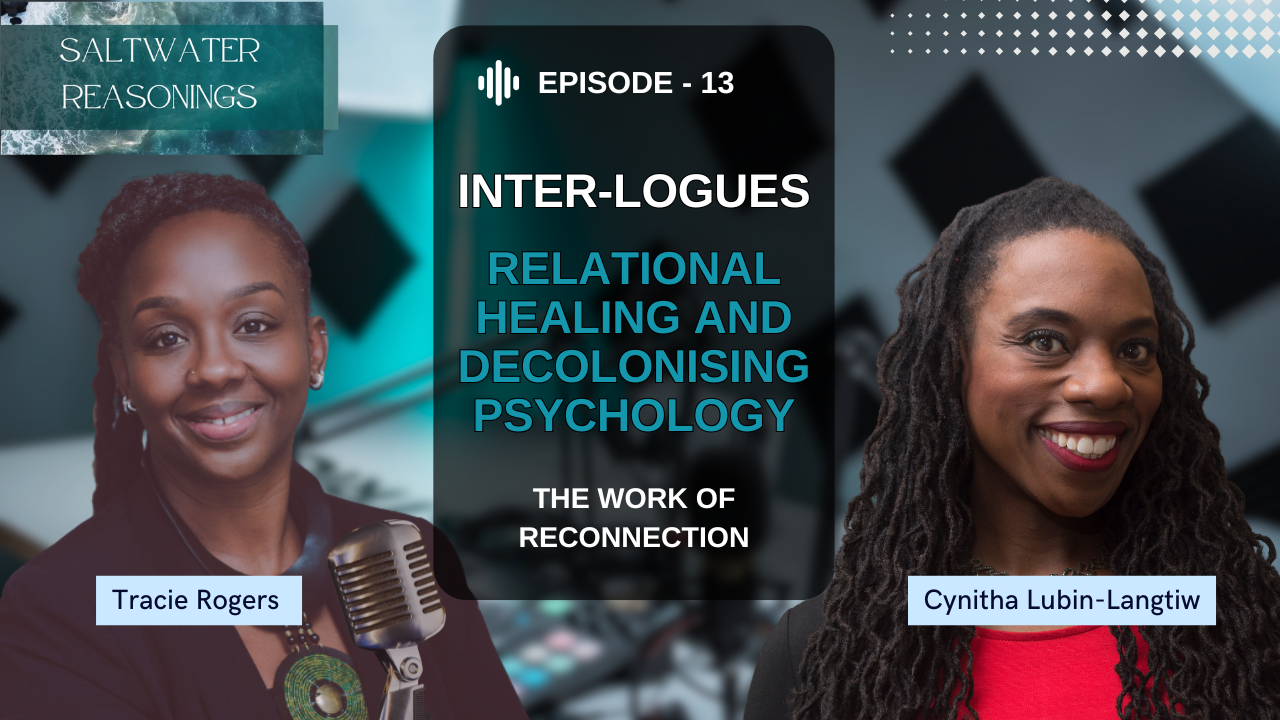
Inter-logues: and Relational Healing, Decolonising Psychology, and the Work of Reconnection
In this episode of Saltwater Reasonings, Tracie Rogers speaks with clinical and community psychologist Cynthia Lubin Langtiw about Inter-logues: a framework that makes visible the researcher’s transformation through qualitative inquiry. Together they explore embodied knowing, Haitian cultural lineages of relationality, and why “making peace with the shaky places” is both a methodological and decolonial practice.
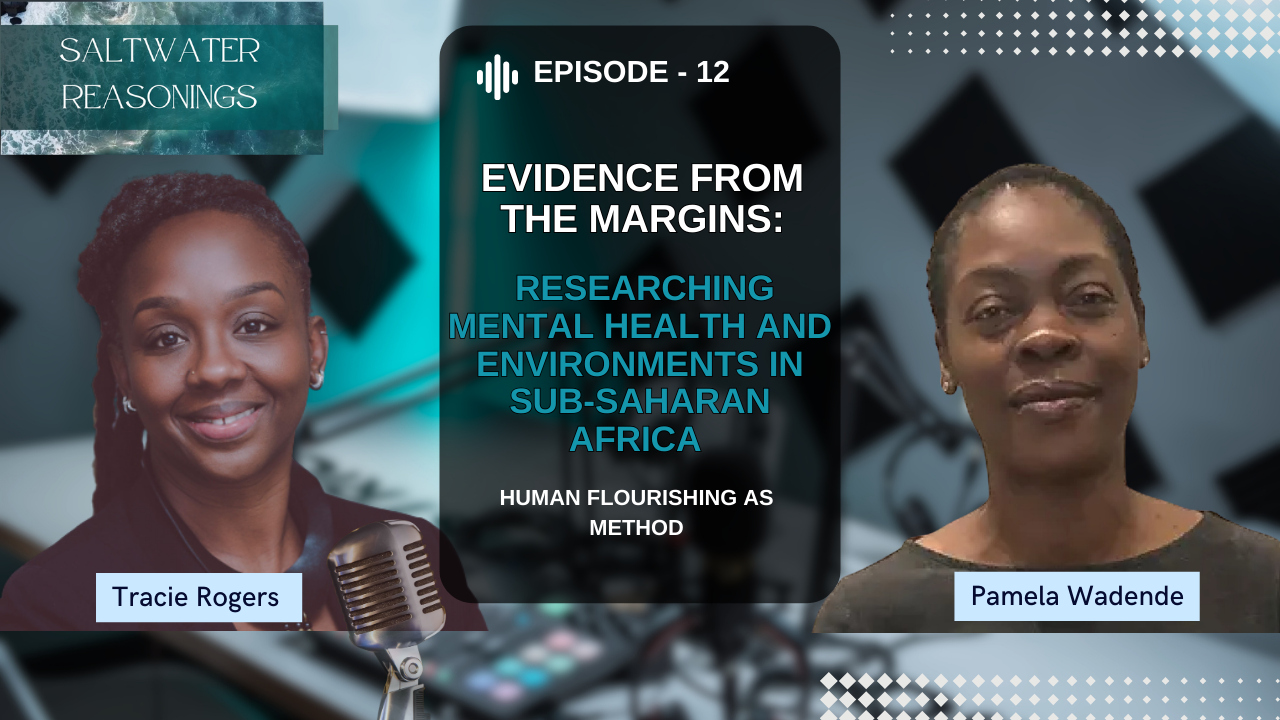
Evidence from the Margins: Researching Mental Health and Environments in Sub-Saharan Africa
In this episode of Saltwater Reasonings, Tracie Rogers is in conversation with developmental psychologist Pamela Wadende of Kisii University, Kenya. Connected through the Pan-African Mental Health Research Network, they reflect on research as ethical responsibility rather than technical exercise. Pamela traces her journey from classroom teacher to multidisciplinary researcher, showing how curiosity, attentiveness, and respect for community knowledge shape her methodological commitments.
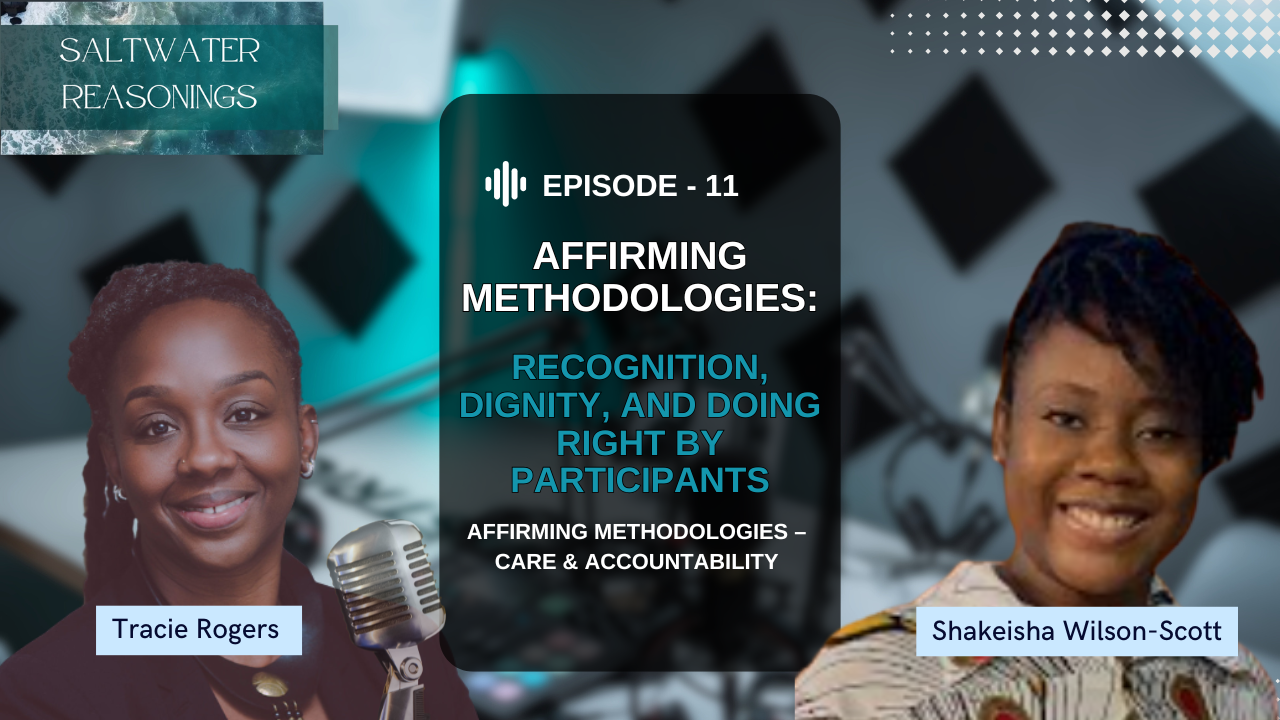
Affirming Methodologies: Recognition, Dignity, and Doing Right by Participants
In this episode of Saltwater Reasonings, Shakeisha Wilson Scott explores affirming methodologies in social work and community-based research, centring dignity, cultural humility, and ethical responsibility. Moving beyond formal ethics approval, she examines what it means to practise an ethics of presence, where language, body, and relationship matter as much as protocol.
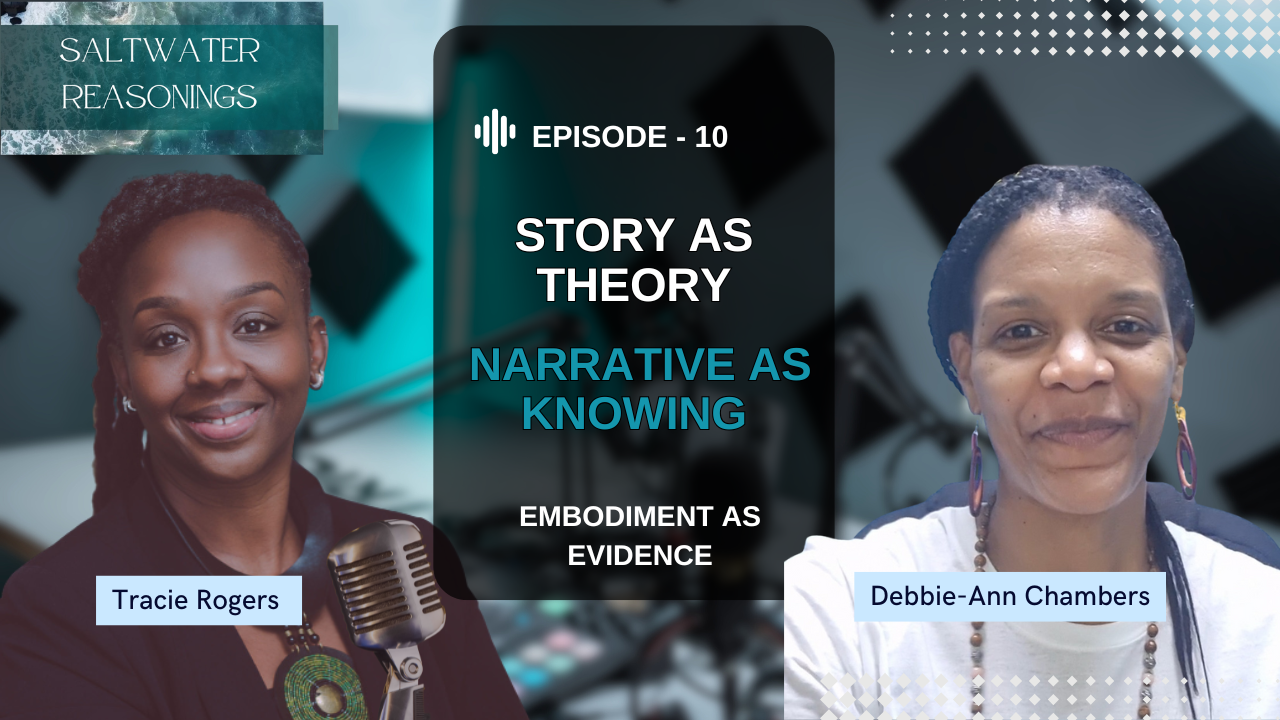
Story as Theory - Narrative as Knowing
In this episode of Saltwater Reasonings, Tracie Rogers is in conversation with Debbie-Ann Chambers of The University of the West Indies, Mona Campus, exploring autoethnography and narrative as Caribbean ways of knowing. The conversation centres vulnerability in research, the ethics of telling personal stories, and the tensions between authority and exposure in narrative inquiry.
Enacting Epistemic Freedom
This conversation examines visual research methodologies as acts of epistemic freedom. Joyanne De Four-Babb reflects on Caribbean knowledge production, institutional research cultures, and how visual methods allow researchers to see beyond singular narratives of marginalisation.
Diasporic Storying – Autoethnography as Method
A reflective conversation with Archana Pathak on diasporic autoethnography as metaphor and method. The episode explores story, theory, and lived experience as relational, liberatory practices, staying with complexity, tension, and unansweredness across diasporic life.
Research at the Edge: Reflexivity, Risk, and Working with Women
In this episode, Deborah McFee and I explore the ethical and emotional complexities of researching violence against women in Caribbean communities. We discuss reflexivity, positionality, accountability beyond the field, and the moral courage required to work at the edge of trauma, harm, and community advocacy.